Dear brothers and sisters,
This is weekly newsletter #26 of the St Ignatius Parish in Belfast.
Contents of this Newsletter:
- Message from Fr Dmitry: St Katherine and Service for the Theotokos
- News and Announcements
- Homily on last Sunday’s Gospel: What shall I do?
Message from Fr Dmitry: St Katherine and Service for the Theotokos
Dear brothers and sisters,
Blessed Feast of Great Martyr Katherine of Alexandria! You can read her Synaxarion HERE
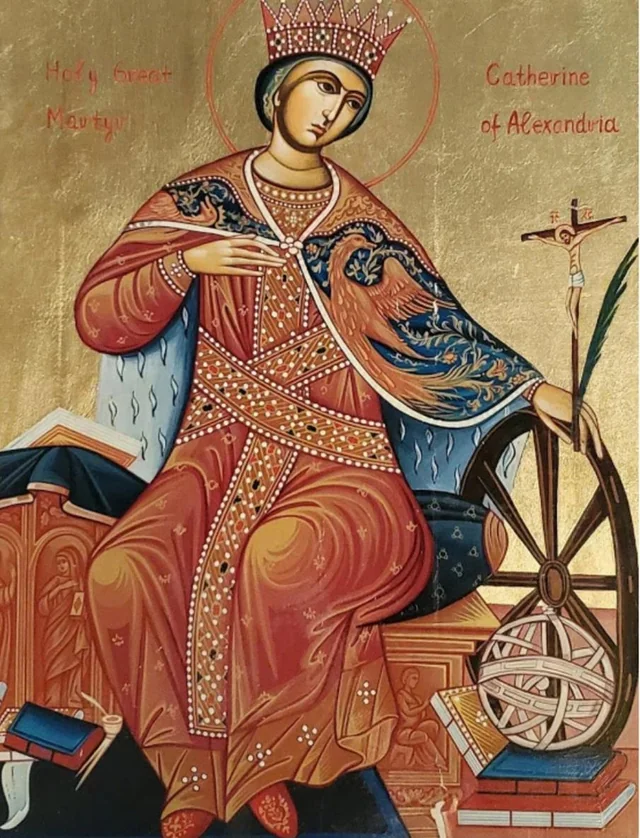
Apolytikion of St Katherine in Tone Five
Let us praise the all-lauded and noble bride of Christ, * the godly Katherine, the guardian of Sinai and its defense, * who is also our support and succor and our help; * for with the Holy Spirit’s sword * she hath silenced brilliantly the clever among the godless; * and being crowned as a Martyr, she now doth ask great mercy for us all.
- Apolytikion chanted in English: https://www.youtube.com/watch?v=sxx_asZ2GmU&list=PL4zvdOOF1pnlfysnnu3-AvDp115S0aiMd&index=51
- Apolytikion chanted in Greek: https://www.youtube.com/watch?v=Bco8PV-TmxY&list=PL4zvdOOF1pnlfysnnu3-AvDp115S0aiMd&index=55
- Apolytikion chanted in Arabic: https://www.youtube.com/watch?v=BG6szPX6ENg&list=PL4zvdOOF1pnlfysnnu3-AvDp115S0aiMd&index=54
Supplication Service for the Theotokos, Wednesday, 26th November
I remind you of the Supplication Service for the Kursk Root Icon of the Theotokos, which is visiting Belfast on the 26-27th November. The service will be held by the St John of Shanghai parish (ROCOR) and we are all invited. I hope you can make it, and God willing, I will see you at the service.
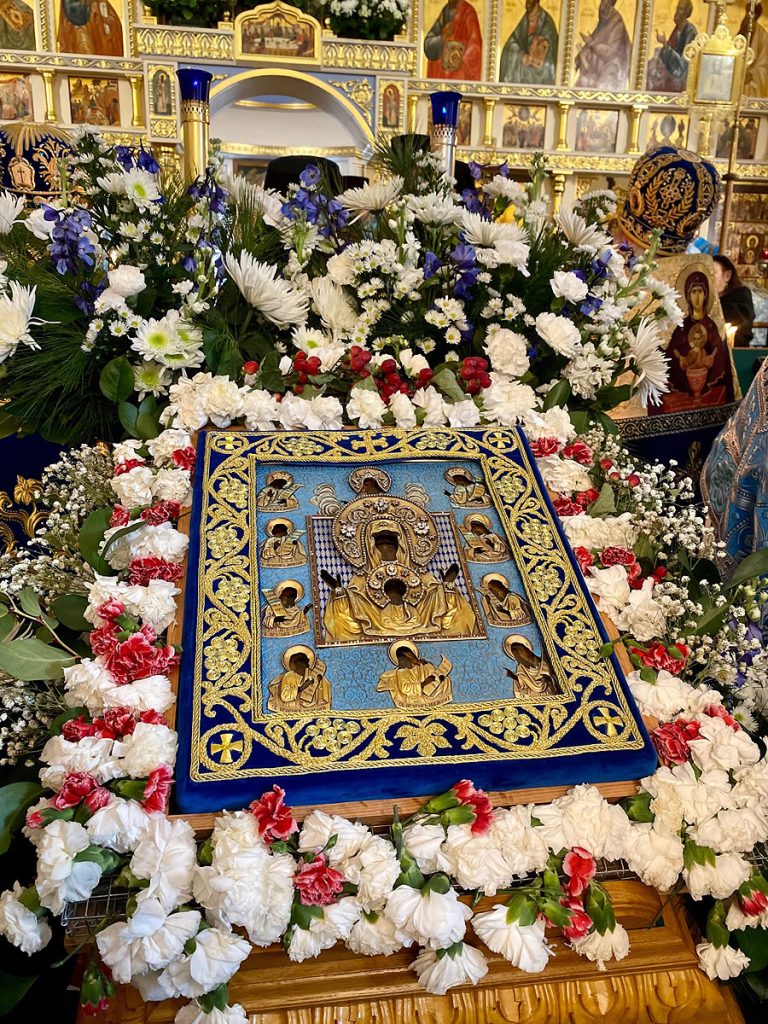
Date: 26 November, Wednesday
Time: 6:00 PM
Location: St Mary’s, 824 Shore Road, Greencastle, BT36 7DG, Belfast, NI
Pilgrimage on the 27th November
The parish of St John will take icon and the faithful on the pilgrimage around the places associated with St Patrick on Thursday, 27th of November. There are still places left. If you want to join in the pilgrimage, please contact the secretary of the parish, Amanda by phone 07818451904 or email secretary.stjohnofshanghai@gmail.com
Home visits
Finally, Fr Justin also will be visiting houses of the faithful with the Icon to bless. He kindly extends the offer of house visits to us too. If you want your house to be visited with the Icon of the Theotokos, please reach out to Amanda asap using the details above.
News and Announcements:
- NO weekly Online Faith & Fellowship Meetings on Wednesdays: Because of the service for the Theotokos, we will NOT hold our usual Faith & Fellowship meeting this Wednesday evening. God willing, we will resume next Wednesday, 3rd of December.
- Parish Library is now open – I remind you that that our parish library is now open! The library offers a growing collection of Orthodox books on various subjects for both adults and children, which you are welcome to borrow and read. You can browse the catalogue online, check the borrowing terms, and even place an order for a book at: saintignatiusbelfast.org/library. Our librarians, Michael and Porphyrius, will be glad to assist you and can be contacted at library@saintignatiusbelfast.org.
Last Sunday’s Gospel Reading and Homily: What shall I do?
The reading from the Holy Gospel according to St Luke (12:16-21):
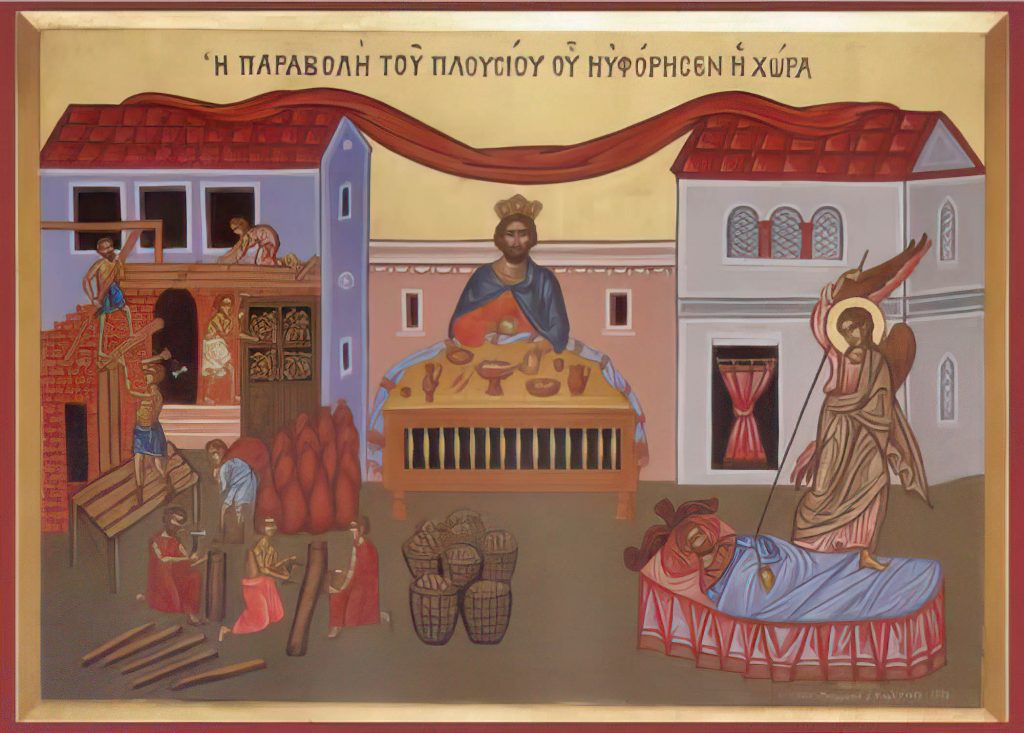
The Lord said this parable: “The land of a rich man brought forth plentifully; and he thought to himself, ‘What shall I do, for I have nowhere to store my crops?’ And he said, ‘I will do this: I will pull down my barns, and build larger ones; and there I will store all my grain and my goods. And I will say to my soul, ‘Soul, you have ample goods laid up for many years; take your ease, eat, drink, be merry.’ But God said to him, ‘Fool! This night your soul is required of you; and the things you have prepared, whose will they be?’ So is he who lays up treasure for himself, and is not rich toward God.” As he said these things, he cried out: “He who has ears to hear, let him hear.
Homily: What shall I do?
In the name of the Father, and of the Son, and of the Holy Spirit. Amen.
In today’s Gospel, our Lord tells the parable of the rich fool. It is a warning about how easily our efforts and our goals can become misplaced. The man in the parable has great success in agriculture: “the ground of a certain rich man yielded plentifully” (Luke 12:16). Notice that Christ does not say the man achieved this purely through his own hard work. Perhaps he worked diligently, or perhaps he simply inherited fertile land. Anyone who has tended a garden knows how much is outside our control: we need favourable weather, we need good soil, and so on.
Christ simply says: “the ground yielded.” God granted this man what we ask for in every service with the Great Litany: “for abundance of the fruits of the earth, and for peaceful times, lets us pray to the Lord” And he received it.
But what is the purpose of this abundance? This man seems completely lost with his wealth. He asks, “What shall I do, since I have no room to store my crops?” (Luke 12:17). This is acquisition for the sake of acquisition. In our society, this kind of behaviour is even praised.
Here the insight of Max Weber, a famous German social thinker, is useful. Max Weber, in his famous study The Protestant Ethic and the Spirit of Capitalism, explains how modern Western culture developed an ethic of continuous work, accumulation, and reinvestment of profit. People were encouraged to live frugally and to reinvest everything they earned. Over time this produced a mentality of acquiring more and more without a clear final purpose. This way of thinking is very close to the behaviour of the rich man in today’s Gospel who asks, “What shall I do?” because he has made accumulation itself his goal.
St Theophylact of Ohrid notices the irony. He writes:
“Does not the pauper say the same thing: What shall I do, for I have nothing to eat or put on? If both the pauper says What shall I do because I have not, and the rich man says What shall I do because I have, then what do we gain by gathering more and more?” (The Explanation of the Holy Gospel according to St Luke, p. 146).
The foolishness of the rich man lies not in being successful, but in having no purpose for his success. St Theophylact says that at the very least the man could have taken a proper rest. Think honestly about our own lives. How exhausted we are earning our salaries or running businesses. How often we say that we do not have time to pray, or to come to church, or to be with our parents, our children, our friends. How often we say that we do not have time to help the poor or listen to the troubles of others. Yet somehow, we find time and energy for the empty pleasures described in the parable: “Take your ease, eat, drink, and be merry” (Luke 12:19).
Christ does not condemn hard work. But it is not the effort which justifies work, but the purpose of the effort. Hard work is good when its purpose is good. The rich man labours without purpose. He misuses the blessings God gives him, such as fertile land, good harvests, and favourable weather. Our focus must be salvation, life with God, so that nothing here holds us back. The rich man’s soul has to be “required” (forcefully) of him because he cannot easily part with the wealth he has made his life’s purpose. The soul of the righteous already belongs to God, and when they are called, they go willingly, having no attachment here.
If our reward is in heaven, and if we are to lay up treasures in heaven, what do we do with the material wellbeing we may enjoy? Christ gives us the answer. We must be “rich toward God” (Luke 12:21). To be rich toward God is not only about money. It begins with spiritual fruits, growing in virtue, fulfilling the commandments, and living the Beatitudes. But the material aspect matters as well. And the main commandment Christ gives us is clear:
“A new commandment I give to you, that you love one another as I have loved you. By this all will know that you are My disciples, if you have love for one another.” (John 13:34-35)
Therefore, the wealth and comfort we are given must be used to help others. If we look beyond ourselves, beyond our comforts and pleasures, we will see a world full of need. The question “What shall I do?” becomes foolish only when we refuse to open our eyes.
The holy triad of spiritual life is prayer, fasting, and almsgiving. Almsgiving is not optional. It is the fulfilment of the commandment of love. If God gives you more than you need, do not store it up for yourself. Use it for others. Of course, you may invest wisely so that you can continue to help. But excess wealth becomes a burden, and it tempts us toward pleasures that do not give real joy.
Do not ask God for abundance of the fruits of the earth and peaceful times if you are going to misuse those fruits and that peace. If you ask for these blessings, then share them with the poor.
In our global world, it is easy to focus on global problems and say that we are contributing to some large effort. There is nothing wrong with that. But Christ says, “The poor you have with you always.” Global problems will be resolved at the Second Coming. The life of one person can be changed today.
The Orthodox tradition teaches several principles of charitable giving. We are taught to give generously. We are taught to give humbly, not seeking praise from others. We are taught to give secretly, as Christ instructs. We are taught to give specifically to real people with real needs, and not only to impersonal causes. We are taught to give habitually, so that generosity becomes part of our nature, like prayer and fasting. And we are taught to give with joy, because giving is a sacrifice, and through the Cross joy came into the world. Christ endured His suffering with joy to save us. When we give, we share that joy, bringing peace and an abundance of blessing to others, and storing up treasure in heaven. Amen!
Yours in Christ,
Fr Dmitry