Beloved brothers and sisters,
This is Community Bulletin #42 of Saint Ignatius Parish in Belfast
Contents of this Bulletin:
- This Week in the Life of the Church: Saints and Fasting
- A Pastoral Word: On Holiness
- News and Announcements: Readers Service, Faith & Fellowship, Pray for Catechumens
This Week in the Life of the Church
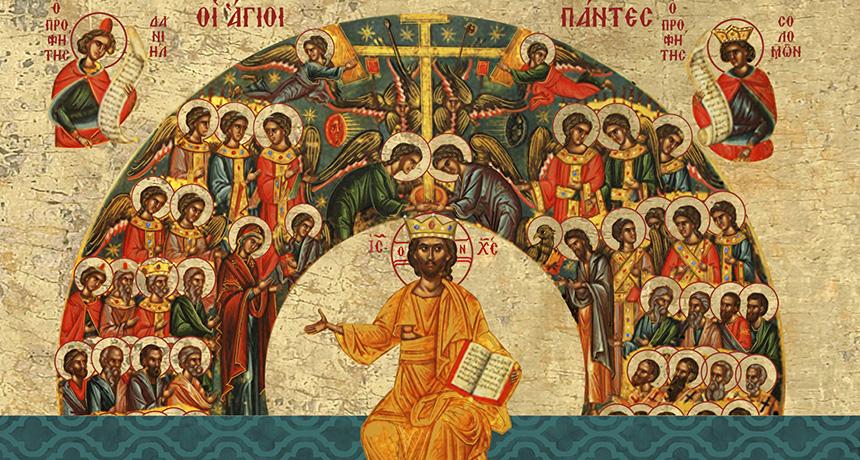
Last Sunday, the Sunday of All Saints, brought to a close this year’s Pentecostarion cycle in the Church calendar. We now return to what might be called the “usual” cycle of the Church year, if there is such a thing as normal in the life of the Church. The cycle of Sunday liturgical readings from St Matthew’s Gospel resumes, and the weeks are now counted as Weeks after Pentecost, until the beginning of the Triodion with the Sunday of the Publican and the Pharisee in February 2027. Likewise, we enter the Sundays of Matthew, until the cycle later switches to the Gospel of Luke.
The week following the Sunday of All Saints also marks the beginning of one of the four major fasting periods of the Church: the Apostles’ Fast. It always begins on the Monday after the Sunday of All Saints and continues until the Feast of the Holy Apostles Peter and Paul on 29 June.
The Apostles’ Fast is less strict than Great Lent:
- On Mondays, Tuesdays, Thursdays, Saturdays, and Sundays, we abstain from meat, dairy products, and eggs, while fish is permitted.
- On Wednesdays and Fridays, we abstain from meat, fish, dairy products, eggs, and wine. The Monastic Typikon also prescribes abstinence from oil on these days, although in parish practice a dispensation for oil is commonly allowed.
As always, when speaking about fasting, it is important to remember that we must first and foremost fast with our hearts. Physical fasting without the intention of changing our hearts, intensifying our prayer, and deepening our repentance will achieve little. We do not fast to justify ourselves before God or before others, but rather to seek God’s mercy and draw closer to Him.
“If thou, O man, dost not forgive everyone who has sinned against thee, then do not trouble thyself with fasting. If thou dost not forgive the debt of thy brother, with whom thou art angry for some reason, then thou dost fast in vain God will not accept thee. Fasting will not help thee, until thou wilt become accomplished in love and in the hope of faith. Whoever fasts and becomes angry, and harbors enmity in his heart, such a one hates God and salvation is far from him”. (St Ephraim the Syrian)
May God grant you a blessed and fruitful fast through the intercessions of the Holy Apostles Peter and Paul.
Saints and Feasts of the Week
*The saints named here accompany the days of the week as living witnesses of Christ. Only the principal saint or feast of each day is listed here, in keeping with the liturgical order of the Church.
- Sunday, 7th of June – Sunday of all Saints
- Monday, 8th of June – Translation of the relics of the Great Martyr Theodore Stratelates
- Tuesday, 9th of June – St. Cyril, archbishop of Alexandria and St Columba of Iona
- Wednesday, 10th of June – Holy Martyr Alexander and Virgin-Martyr Antonina at Constantinople
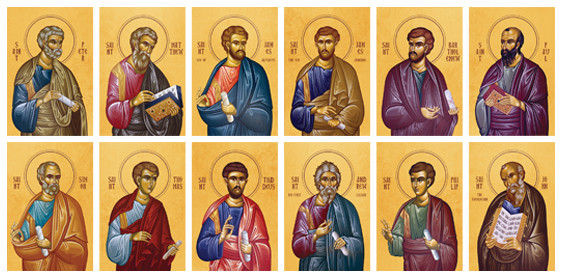
- Thursday, 11th of June – Holy Apostles Bartholomew and Barnabas
- Friday, 12th of June – St. Onuphrius the Great
- Saturday, 13th of June – Holy Martyr Aquilina of Byblos in Syria
- Sunday, 14th of June – 2nd of Matthew, Sunday of All Saints of Antioch
Hymns of the Week
*The hymns listed here are those that shape the prayer of the Church for the week, following the liturgical order and hierarchy. They are offered as an aid to prayer and may be used, as each is able, in personal prayer or a simple prayer rule at home.
RESURRECTIONAL APOLYTIKION IN TONE EIGHT
From the heights Thou didst descend, O compassionate One, and Thou didst submit to the three-day burial, that Thou might deliver us from passion; Thou art our life and our Resurrection, OvLord, glory to Thee.
APOLYTIKION OF ALL SAINTS IN TONE FOUR
Thy Church, O Christ God, hath regaled herself in the blood of Thy Martyrs throughout the entire world, as in porphyry and purple. Through them she lifteth her voice crying: Turn with Thy compassion toward Thy people, and grant peace to Thy city, and to our souls the Great Mercy.
APOLYTIKION OF SS. BARNABAS AND BARTHOLOMEW IN TONE THREE
O Holy Apostles Barnabas and Bartholomew, intercede with our merciful God, to grant our souls forgiveness of sins.
KONTAKION OF ALL SAINTS IN TONE EIGHT
As first-fruits of our nature to the Planter of created things, * the world presenteth the God-bearing martyred Saints in off’ring unto Thee, O Lord. * Through their earnest entreaties, * keep Thy Church in deep peace and divine tranquility, * through the pure Theotokos, O Thou Who art greatly merciful.
Epistle and Gospel Readings:
*The Epistle and Gospel of the Sunday that begins the current liturgical week
- Epistle: Hebrew 11:33-12:2
- Gospel: Matthew 10:32-33, 37-38; 19:27-30
The Sunday and daily Scripture readings may be read online via the Archdiocesan website: https://www.antiochian-orthodox.com/calendar
A Pastoral Word: On Holiness
The Pentecostarion season, which began with the celebration of our Lord’s Resurrection and continued through His Ascension and the Descent of the Holy Spirit at Pentecost, reaches its natural culmination in the Sunday of All Saints. This is no coincidence. The holiness of the saints is not an isolated phenomenon, but the fruit of God’s saving work. Through the incarnation, crucifixion, resurrection, and ascension of His Son, our Lord Jesus Christ, and through the descent of His All-Holy Spirit upon the Apostles and, through them, upon the whole Church, God has made humanity capable of sharing in His own divine life. The saints are the living proof that the grace bestowed at Pentecost continues to bear fruit in every generation.
“Therefore you shall be perfect, just as your Father in heaven is perfect” (Matthew 5:48). At first hearing, these words may seem daunting. How can imperfect and sinful human beings become perfect?
The answer lies in understanding that Christian perfection is not moral flawlessness, but participation in the life of God. We are all called to holiness, not by our own strength, but through the grace of God working within us. This is the vocation of every Christian. As St Paul writes to the Romans, he addresses his Epistle “to all who are in Rome, beloved of God, called to be saints” (Romans 1:7).
But what does it mean to be holy? Is holiness simply the same as being a good person? Not quite.
As C. S. Lewis wrote: “A Christian does not think God will love us because we are good, but that God will make us good because He loves us.”
Holy people are still human people. They continue to struggle and to face temptations. Like all of us, they require vigilance in order not to fall into sin, and when they do fall, they return to God through repentance. A holy person is not one who is without any blemish, but one who recognises his or her sins, seeks God’s mercy, and continually strives to be corrected and transformed by His grace.
The saints are not people who ceased to struggle. Rather, they are people who persevered in the struggle until the end. Their holiness was real during their earthly lives, yet they continued to grow in repentance and love of God. The completion of that holy life came not through the absence of struggle, but through their departure from this world into a fuller and more perfect communion with Christ in His Kingdom.
This is why we often experience a sense of peace, warmth, and spiritual comfort in the presence of holy people. Their holiness does not come primarily from a moral perfection, but from their closeness to God. Even if they have not yet overcome every weakness, they have opened their hearts to God’s grace and allowed it to work within them.
Holiness is the gift of God. Only God alone is truly holy, yet He invites all people to share in His holiness. We receive this gift through the grace of the Holy Spirit, particularly in the Sacraments of Holy Baptism and Chrismation. Holiness is not acquired as a reward for good behaviour or personal achievement. Rather, it is given to us by God, who created us in His image and calls us into communion with Himself.
For this reason, the Christian life should not be understood primarily as a process of acquiring holiness, but as a process of preserving and restoring the gift that has already been given to us. Through repentance, prayer, participation in the sacraments, and a life of faithfulness to Christ, we seek to preserve and restore our communion with God whenever it is weakened by sin.
The goal of the Christian life is salvation, which is eternal life in union with God. The completion of a holy life on earth is not an end, but the beginning of a fuller and more perfect communion with Christ in His Kingdom.
Throughout the Gospel, our Lord reveals the path of holiness. It begins with repentance: “Repent, for the Kingdom of Heaven is at hand” (Matthew 4:17). It is grounded in faith: “He who believes and is baptised will be saved” (Mark 16:16). It is nourished by love: “You shall love the Lord your God with all your heart… and your neighbour as yourself” (Mark 12:30-31). It grows through humility, as we learn to place God’s will before our own: “Learn from Me, for I am gentle and lowly in heart” (Matthew 11:29).
The path of holiness also requires courage, patience, and perseverance. Courage to remain faithful in the face of difficulties; patience to endure suffering with hope and trust in God; and perseverance to continue the struggle even when progress seems slow. “He who endures to the end shall be saved” (Matthew 24:13).
When we celebrate the Sunday of All Saints, we do not simply honour extraordinary men and women from the past. We celebrate the fulfilment of God’s purpose for humanity. The saints show us what human beings become when they cooperate with the grace of God. Their lives remind us that holiness is not an impossible ideal, but the calling of every person. Will you respond to God’s calling?
News and Announcements
- Faith & Fellowship Meeting this Wednesday, 10th June, 7:00 PM – Join us on Zoom this Wednesday. This time we will pray Paraklesis (Supplication) to the Holy Mother of God, in light of disturbance and unrest witnessed in Belfast and across Northern Ireland in recent days. Everyone welcome! Link: https://ucl.zoom.us/j/93643306643.
- Readers Service, Sunday 14th June, 11:00 am at the Church – Please join us at the church for the monthly Readers service of Hours and Typika (without priest) this coming Sunday, which is the Sunday when we commemorate All Saints of Antioch. Come to pray together, to hear the Word of God and to have fellowship afterwards. Address: Cullen Memorial Hall, Methodist Complex, 381 Donegall Road, Belfast, BT12 6GR
- Prayers for new Catechumens. With God’s help a new Catechesis group started at our parish this week. 14 inquirers joined the group, with 12 from St Ignatius parish and 2 from St George’s Cathedral. The other group, which began a few months ago, is advancing well, and their catechesis will be coming to conclusion over the summer. I ask all of you to pray for all of our catechumens on their journey of learning about Orthodox Faith.
- Have you visited our Parish Library yet? Our library offers a growing collection of Orthodox books for adults and children: spiritual classics, lives of the saints, theology, Church history, and books for young readers. A good spiritual book can deepen our understanding of the faith and accompany us in our spiritual life.
You can browse the catalogue and request books online through the parish website. All the information about borrowing books, together with the online request form, can be found here: https://saintignatiusbelfast.org/library
Our librarians, Michael and Porphyrios, will be happy to help if you are looking for something to read. You can contact them at: library@saintignatiusbelfast.org