Beloved brothers and sisters,
This is Community Bulletin #51 of Saint Ignatius Parish in Belfast
Contents of this Bulletin:
- This Week in the Life of the Church: Reader Services on the weekedn 24th&25th of October
- A Pastoral Word: The Gift of Salvation and Our Response
- Announcements: YAM Bible Study this Saturday
This Week in the Life of the Church
This coming weekend, 24th and 25th of October, we are holding our regular monthly Reader Services (without a priest). In addition, our youth from YAM Belfast, will meet for the second session of the Bible Study on the Gospel of St Luke with Carsten.
The schedule for the weekend is as follows:
Saturday, 24th October:
– 3:30 pm – YAM Bible Study
– 5:00 pm – Reader Vespers (open for all not just YAM) followed by fellowship in the kitchen
Sunday, 25th October:
– 11:00 am – Reader Service of Hours and Typika, followed by light refreshments.
Location: Cullen Memorial Hall, Methodist Complex, 381 Donegall Road, Belfast, BT12 6GR
Please make every effort to come together as a community to pray!
Saints and Feasts of the Week
*The saints named here accompany the days of the week as living witnesses of Christ. Only the principal saint or feast of each day is listed here, in keeping with the liturgical order of the Church.
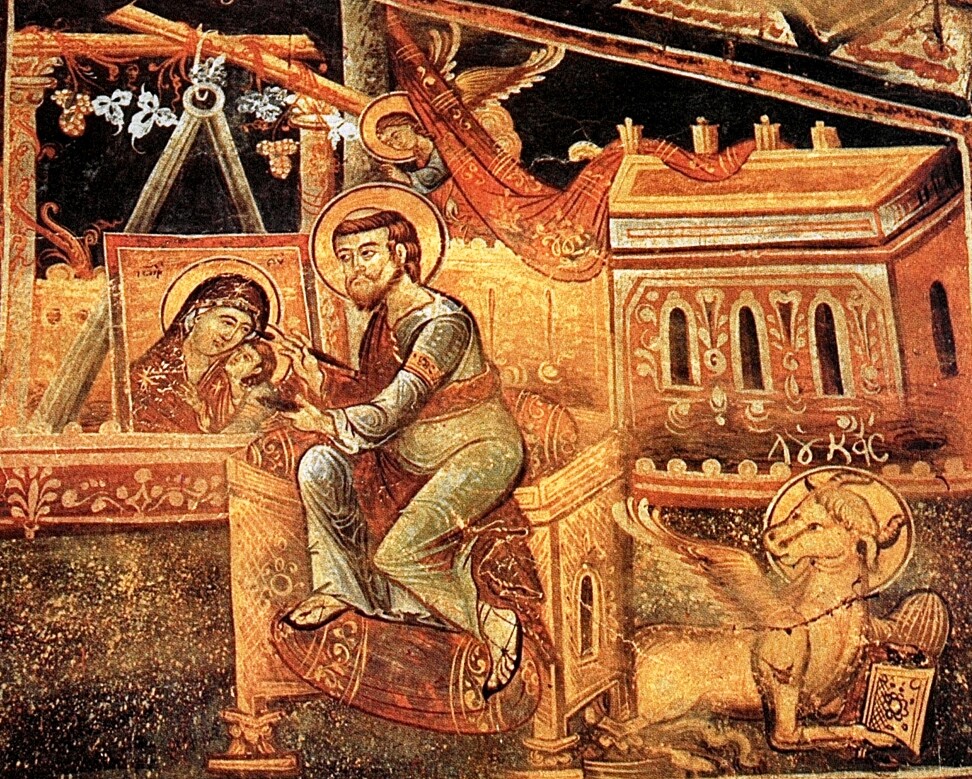
- Sunday, 18th of October – 3rd Sunday of Luke, Holy Apostle and Evangelist Luke
- Monday, 19th of October – Righteous Prophet Joel
- Tuesday, 20th of October – Great Martyr Artemius at Antioch
- Wednesday, 21st of October – St. Hilarion the Great of Palestine
- Thursday, 22nd of October– Holy Equal-to-the-Apostles Abercius (Averkios), bishop and Wonderworker of Hierapolis
- Friday, 23rd of October – Holy Apostle James, Brother of the Lord
- Saturday, 24th of October – Arethas the Great Martyr and His Fellow Martyrs
- Sunday, 25th of October – 6th Sunday of Luke, Holy Martyrs Marcian and Martyrius the Notaries, of Constantinople
Hymns of the Week
*The hymns listed here are those that shape the prayer of the Church for the week, following the liturgical order and hierarchy. They are offered as an aid to prayer and may be used, as each is able, in personal prayer or a simple prayer rule at home.
RESURRECTIONAL APOLYTIKION IN TONE THREE
Let the heavens rejoice and the earth be glad, for the Lord hath done a mighty act with His own arm. He hath trampled down death by death, and become the first-born from the dead. He hath delivered us from the depths of Hades, granting the world the Great Mercy
APOLYTIKION OF ST. LUKE THE EVANGELIST IN TONE THREE
O holy Apostle and Evangelist Luke, intercede with the merciful God, to grant our souls forgiveness of sins.
APOLYTIKION OF ST. JAMES THE “BROTHER OF GOD” IN TONE FOUR
Since thou art a Disciple of the Lord, thou didst receive the Gospel, O righteous James. And since thou art a martyr thou art never rejected, and since thou art a brother of God, thou art privileged, and since thou art a High Priest, it is thy right to intercede. Wherefore, beseech thou Christ God to save our souls.
ORDINARY KONTAKION IN TONE TWO
O protection of Christians that cannot be put to shame, mediation unto the Creator most constant, O despise not the suppliant voices of those who have sinned; but be thou quick, O good one, to come unto our aid, who in faith cry unto thee: Hasten to intercession, and speed thou to make supplication, thou who dost ever protect, O Theotokos, them that honor thee.
Epistle and Gospel Readings:
*The Epistle and Gospel of the Sunday that begins the current liturgical week
- Epistle: Colossians 4:5-11, 14-18
- Gospel: Luke 10:16-21
The Sunday and daily Scripture readings may be read online via the Archdiocesan website: https://www.antiochian-orthodox.com/calendar
A Pastoral Word: The Gift of Salvation and Our Response
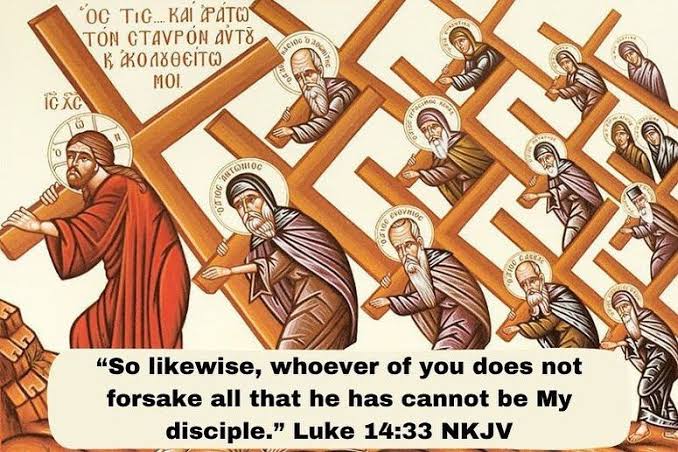
While preparing for this Monday’s catechesis class on Baptism, I came across a fascinating discussion in the writings of the early ascetic Fathers about the relationship between confessing the right faith, the grace of Baptism and other Sacraments in the Church and the spiritual life. These reflections are based on an article by Fr. Alexis Torrance, “Atonement in the Ascetic Fathers”, as found in the edited volume On the Tree of the Cross (eds. Baker, Danckaert and Marinides, 2016). It examines the teachings of Greek-speaking Christian ascetic holy fathers from the fourth to the seventh centuries, from St. Anthony the Great to St. John Climacus.
What particularly struck me was how insistently these Fathers connected the mysteries (sacraments) of our faith with the practical demands of Christian discipleship. Right faith, Baptism [and Chrismation with Eucharist], repentance and the keeping of Christ’s commandments are not separate aspects of Christianity. They belong to one continuous spiritual life, through which we respond to the salvation freely given to us by Christ.
For St. John Climacus, right faith is the necessary foundation of authentic ascetic life. Why? Because a faith that is constantly called into question undermines humility, the very foundation of spiritual progress.
A wonderful story tells of Abba Agathon, one of the Desert Fathers. When some visitors accused him of being a fornicator, a proud man and someone who spoke nonsense, he humbly accepted their accusations. But when they called him a heretic, he firmly rejected the accusation. When asked why, he explained that the other accusations benefited his soul because they humbled him. Heresy, however, meant separation from God, and he “had no wish to be separated from God”.
Yet the concern of the ascetic Fathers was not simply with possessing correct theological knowledge. It was not about an elaborate faith, which is the theologians’ realm. Their primary concern was how the faith we profess becomes the life we actually live.
This brings us to Baptism. St Mark the Ascetic, a fifth-century monk, offers a particularly profound account of Baptism as both the foundation of Christian life and the gift whose fullness we are called to realise throughout that life.
In Baptism, we receive the grace of God freely: the remission of sins and the renewal of our nature, wounded by ancestral sin. Nothing is lacking in this gift. Yet what we receive sacramentally must become manifest in our lives through the keeping of Christ’s commandments, through repentance and spiritual growth.
Our task is not to produce grace through our own efforts, but to uncover and bring to fruition the gift already bestowed upon us. The Holy Spirit is given to us, but we must learn to live in accordance with His presence.
This is why salvation cannot be understood either as a personal achievement or as something that requires no response from us. We cannot save ourselves. But neither can we treat Baptism, or our membership in the Orthodox Church, as though it had no implications for how we live.
Imagine receiving an extraordinary gift, placing it in a drawer and never opening it. The gift is no less real, but we failed to use it.
How, then, do we respond to this gift? The answer of the ascetic Fathers is repentance, understood not merely as acknowledging our sins and asking God for forgiveness, but as a radical transformation of our mind and heart, a turning towards God, and a commitment to taking up our Cross and following Christ.
St Barsanuphius writes that “to renounce ourselves and take up the Cross means to cut off one’s will in everything, and not consider oneself anything”.
Spiritual life in Christ is not simply a matter of following religious rules or accumulating virtues. St. Mark the Ascetic reminds us that Christ’s Cross, not our own achievements, has conquered sin: “do not destroy sin, for this has been done through the cross alone”. He writes that the Law’s perfection cannot be found in human virtues alone, for it is hidden in the Cross of Christ.
The Cross is therefore both the source of our redemption and the pattern of our Christian life. Christ has accomplished what we could never accomplish ourselves. Our response is to turn towards Him continually, surrendering our own will and learning to live according to His commandments.
For this reason, St Mark understands repentance not merely as one Christian practice among others, but as the very essence of our response to Christ. “Our Lord Jesus Christ <….> decreed the law of liberty by means of various teachings, and to all set a single goal, saying: ‘Repent’, so that we might understand by this that all the diversity of the commandments is summed up by one word: repentance”.
A remarkably concise expression of this relationship in the words of one non-Orthodox theologian: “Jesus paid it all, so I owe my all to Him.”
Of course, this does not mean that we can somehow repay Christ for our salvation. We cannot. But it captures something essential: because Christ has given everything for us, we are called to offer our whole lives to Him.
And this brings us to another important aspect of taking up the Cross. Repentance and self-denial are not merely private spiritual exercises. They find their fullest expression in love for others.
Christ laid down His life for us, and we are called to follow His example. This fulfils the greatest commandment of love. Our Lord says: “Greater love has no one than this, than to lay down one’s life for his friends”. It is what Christ did, and so, we are called to do. As the Apostle John writes: “Because He laid down His life for us, we ought to lay down our lives for the brethren” (1 John 3:16).
This helps us understand why the ascetic tradition places such great emphasis on spiritual guidance and responsibility for the salvation of others. Spiritual guidance is emphasised in the Church not because it is desirable for one person to exercise power over another, but because it is a way of serving others in love and helping them towards Christ.
St John Climacus writes: “We can offer no gift to God so acceptable as to bring Him rational souls through repentance. The whole world is not worth so much as a soul”
Certainly, priests and monastic elders play a particular role and bear specific responsibilities in this regard. But we should not imagine that concern for the salvation of others belongs to them alone. Every Christian is called, according to their circumstances, to support others, to help them towards God and to bear their burdens.
As the Apostle Paul teaches: “Bear one another’s burdens, and so fulfil the law of Christ” (Galatians 6:2).
This is what it means to make the Cross personal: to renounce our selfishness, to serve others, and to offer ourselves in love, just as Christ offered Himself for us.
The great ascetics may have pursued this calling with extraordinary intensity, withdrawing into the desert and dedicating their entire lives to prayer and repentance. But the principles of their spiritual life are not reserved for monks.
We may not be called to leave the world or live in a monastery. We have families, work, responsibilities and different circumstances. Yet the calling is the same for all of us: to hold fast to the right faith, live in repentance, keep God’s commandments, and love one another sacrificially. The particular form this takes will differ, but none of us is exempt from this calling.
So perhaps the question we should ask ourselves is not whether we can imitate the extraordinary achievements of the Desert Fathers, but how we can begin to live these same principles in our own circumstances, today.
And as we begin this journey, we must remember above all that our salvation does not begin with our own achievements. It begins with Christ, who has already accomplished everything necessary for our redemption and has freely offered us the gift of new life.
You do not need, and indeed cannot, save yourself. Christ is the One who saves you. He has already extended His hand to you. Your task is to take it, and to follow Him.
Announcements
- Faith & Fellowship Meeting this week – Join our regular Faith & Fellowship meeting this Wednesday, 21st October, at 7:00 pm on Zoom. We will pray the Little Compline and speak about the saints of the day. Zoom link: https://tinyurl.com/StIgnatiusFellowship
- Meeting 2 of the YAM Bible Study – are warmly invited to the second session of our YAM Bible Study on the Gospel of St Luke, taking place on Saturday, 24th October, from 3:30 to 4:30 pm. Not yet a YAM Member? Complete the registration form here to join: https://forms.cloud.microsoft/e/xVHJZQvcTJ
- Have you visited our Parish Library yet? Our library offers a growing collection of Orthodox books for adults and children: spiritual classics, lives of the saints, theology, Church history, and books for young readers. A good spiritual book can deepen our understanding of the faith and accompany us in our spiritual life.
You can browse the catalogue and request books online through the parish website. All the information about borrowing books, together with the online request form, can be found here: https://saintignatiusbelfast.org/library
Our librarians, Michael and Porphyrios, will be happy to help if you are looking for something to read. You can contact them at: library@saintignatiusbelfast.org